Restaurant & Hospitality Business Valuation Services in Winnipeg
Independent business valuation, equipment appraisal, and transaction advisory services for restaurants, bars, cafés, and hospitality businesses across Winnipeg and Manitoba.
Hospitality businesses carry unique valuation considerations — lease terms, location dependence, brand reputation, customer traffic patterns, and significant capital invested in commercial kitchen equipment. Acadia Hill brings the industry-specific understanding required to produce valuation conclusions that accountants, lawyers, and lenders can rely on.
Advisory Services for Restaurants & Hospitality Businesses
Hospitality operators often need professional financial analysis when making major business decisions — not just when selling. Acadia Hill provides integrated support across valuation, appraisal, transaction, and planning work, so restaurant owners work with one advisor who understands the full picture.
Restaurant Business Valuations
Independent valuation reports for restaurants and hospitality businesses, prepared by a Chartered Business Valuator. Used when selling a restaurant, bringing in partners, restructuring ownership, or supporting tax and estate planning work. Our business valuation services account for the lease dependence, brand value, and revenue patterns unique to hospitality operations.
Kitchen & Restaurant Equipment Appraisals
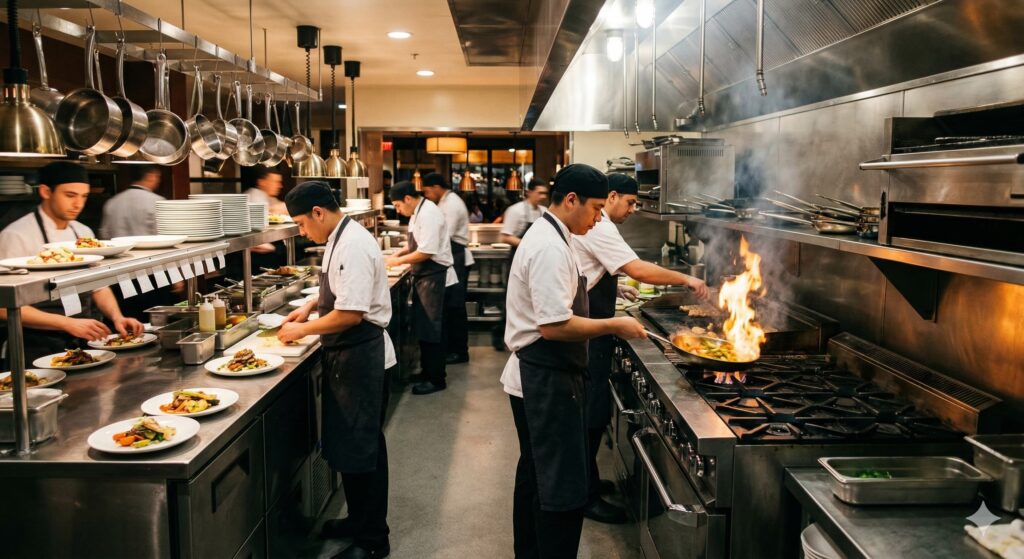
Commercial kitchens represent significant capital investment. Lenders frequently request equipment appraisals when evaluating collateral for restaurant financing, and they are also required for insurance coverage, financial reporting, and transaction support.
Transaction Advisory
Confidential guidance when buying or selling a restaurant or hospitality business. From pre-transaction valuation work through deal structuring, marketing, and negotiation support — our transaction advisory team works alongside your legal and accounting team to move the deal forward.
Business Plans for Restaurants
Structured business plans and financial projections for new restaurant openings, expansions, renovations, or financing applications. Built around your actual operating model, menu economics, and location — not generic templates.
Unique Factors in Valuing a Restaurant or Hospitality Business
Valuing a restaurant or hospitality business requires more than applying a standard earnings multiple. The sector’s financial profile — location dependence, lease structure, brand reputation, and equipment intensity — demands industry-specific analysis.
Location & Lease Terms
Restaurants depend heavily on their physical location and lease structure. Favourable lease terms can add significant value, while short remaining terms or unfavourable renewal clauses can reduce it substantially.
Revenue Stability
Hospitality businesses often experience seasonal and economic fluctuations. A proper valuation normalizes for these patterns rather than relying on a single year’s performance or a few strong months.
Owner Involvement
Many restaurants rely heavily on the owner for day-to-day management, chef reputation, or customer relationships. High owner dependence typically reduces transferability and the value a buyer is willing to pay.
Brand & Customer Base
Established restaurants may carry meaningful goodwill tied to reputation, reviews, social media presence, and a loyal repeat customer base. Quantifying this goodwill requires careful analysis.
Equipment & Build-Out Costs
Commercial kitchens require significant capital investment in ovens, refrigeration, ventilation, and finishing. The gap between book value and fair market value of this equipment is often material.
Staffing & Labour Costs
Labour is one of the largest cost centres in hospitality. Staff retention, wage structures, and the ability to operate without the current owner all affect risk assessment and value.
Restaurant Equipment Often Represents Significant Value
In many restaurant and hospitality businesses, the fair market value of kitchen equipment, bar equipment, and fixtures represents a material portion of total enterprise value. Depreciated book value on financial statements rarely reflects what this equipment would actually sell for on the open market — or what it would cost to replace.
In many cases, a machinery and equipment appraisal is performed alongside the business valuation to determine the fair market value of restaurant assets. This ensures the valuation conclusion is grounded in actual asset values rather than accounting estimates.
Common restaurant equipment appraised includes commercial ovens and ranges, walk-in and reach-in refrigeration systems, fryers and grills, food prep stations and stainless steel tables, bar equipment and dispensing systems, point-of-sale systems, ventilation and exhaust hoods, dishwashing systems, and dining room furniture and fixtures.
Common Situations
Supporting a business valuation with verified asset values
Providing collateral documentation for restaurant financing
Establishing insurable values for kitchen equipment
Supporting asset allocation in a restaurant sale
Estate and tax planning where equipment value is material
New location build-out cost analysis
When Restaurant Owners Seek Advisory Services
Most hospitality business owners reach out when a specific event creates a need for professional-grade analysis. These are the situations we see most often.
Preparing to Sell a Restaurant
Need to understand value, prepare marketing materials, and position the business for sale.
Partner Buyouts
Establishing fair value when one partner is buying out another or restructuring ownership.
Estate Planning or Tax Reorganization
Accountant requires an independent valuation for an estate freeze, reorganization, or Section 85 rollover.
Financing or Investor Discussions
Lender or investor requesting a business plan, equipment appraisal, or financial projections to support funding.
Evaluating a Purchase Opportunity
Considering buying an existing restaurant and need independent analysis before making an offer.
Expansion or New Location Planning
Planning a second location, renovation, or concept expansion that requires financial projections and planning.
Types of Hospitality Businesses We Work With
Acadia Hill provides valuation, appraisal, and advisory services to a range of restaurant and hospitality businesses across Winnipeg and Manitoba.
Full-Service Restaurants
Sit-down dining establishments with full kitchens, licensed service, and dine-in operations.
Quick Service Restaurants
Fast food, fast casual, and counter-service operations with high volume and streamlined menus.
Cafés & Coffee Shops
Independent and small-chain café operations with food and beverage service.
Bars & Pubs
Licensed beverage establishments with varying food service levels and entertainment components.
Breweries & Taprooms
Craft breweries with on-site taproom service, production equipment, and retail operations.
Catering Companies
Off-premise catering operations with commercial kitchen facilities, event equipment, and vehicle fleets.
Food Service Operations
Institutional and contract food service providers serving schools, hospitals, and corporate clients.
Hospitality Groups
Multi-location operators managing several restaurant concepts, brands, or venues under one ownership structure.
Typical Information Required
Most restaurant valuation and appraisal engagements can be scoped quickly once we understand the business and the purpose of the work. The information below is typical — not all items are required for every engagement, and we will guide you through what is needed for your specific file.
If financial records are incomplete or if revenue is partly cash-based, that is common in hospitality and does not prevent the engagement from moving forward.
Documents & Information
Financial statements (3–5 years)
Corporate tax returns
Lease agreement and renewal terms
Equipment list with approximate values
Payroll and staffing information
Point-of-sale reports (monthly or annual)
Major supplier contracts
Why Work With a Chartered Business Valuator
The CBV designation is Canada’s recognized professional credential for business valuation. When a valuation needs to support a tax position, a legal matter, a financing application, or a negotiation, the credentials and methodology behind the opinion matter as much as the conclusion itself.
Independent, Defensible, Practical
Acadia Hill prepares valuation work that holds up under scrutiny — from CRA, from opposing counsel, from lenders — while remaining clear enough for business owners to understand and act on. The goal is not just a number, but a well-reasoned opinion that the client and their advisors can use with confidence.
For hospitality businesses specifically, the combination of business valuation and equipment appraisal expertise under one firm eliminates the coordination issues that arise when multiple independent providers are involved.
Credentials That Matter
Independent valuation opinions prepared by a CBV are accepted by accountants for tax filings and estate work, by lenders for financing decisions, and by legal professionals for dispute resolution and litigation support.
The Hospitality Industry in Winnipeg
Winnipeg’s restaurant and hospitality market presents distinct valuation considerations shaped by local market dynamics. A competitive dining landscape, evolving consumer preferences, and varying demand across downtown, neighbourhood, and suburban locations all affect how hospitality businesses are valued.
Tourism and event-driven demand — from the Jets season to Festival du Voyageur and Folklorama — creates seasonal revenue patterns that must be properly analyzed and normalized. Changing consumer trends including delivery platforms, ghost kitchens, and shifting dining habits also influence the long-term risk profile of hospitality businesses in the market.
Acadia Hill’s focus on Winnipeg and Manitoba means every valuation reflects an understanding of the local competitive environment, lease market, labour conditions, and regulatory landscape — not assumptions imported from larger markets.
What Affects Local Valuations
Competitive restaurant landscape across Winnipeg neighbourhoods
Seasonal demand tied to tourism, festivals, and events
Downtown vs. suburban location dynamics
Evolving delivery and takeout market
Local labour market conditions and wage trends
Commercial lease terms and renewal patterns
Restaurant & Hospitality Business Valuation FAQ
How much does a restaurant business valuation cost?
Most restaurant business valuations start at $4,000 for a calculation-level report. Final pricing depends on the complexity of the operation, the number of locations, the quality of financial records, and the purpose of the engagement.
How long does a restaurant valuation take?
Many files are completed within two to four weeks once financial information is received. Multi-location hospitality groups or files involving disputes may take longer.
Can kitchen equipment be appraised separately?
Yes. A kitchen and restaurant equipment appraisal can be performed as a standalone engagement or alongside a business valuation. This provides verified asset values for commercial ovens, refrigeration, bar equipment, and other restaurant assets.
Do lenders require valuation reports for restaurant financing?
Some lenders request business valuations or equipment appraisals when evaluating financing applications for restaurant purchases, renovations, or expansions. Independent reports prepared by a CBV meet the documentation standards most lenders expect.
What factors most influence the value of a restaurant?
The most common value drivers include earnings consistency, lease terms and remaining duration, location quality, owner dependence, brand strength, equipment condition, and the transferability of the customer base and staff.
How is a restaurant with cash revenue handled?
Hospitality businesses with cash components require careful analysis. Acadia Hill works with the financial records and POS data available, and can discuss the implications of unreported revenue on the valuation conclusion.
Can you value a restaurant that is losing money?
Yes. In some cases, asset value, lease value, or normalized results after adjustments may be more relevant than current earnings. The appropriate valuation approach depends on the facts and the purpose of the engagement.
Do you work with my accountant or lawyer on the file?
Yes, and we prefer it. Most valuation and transaction files involve coordination with the client’s existing accountant and lawyer. Acadia Hill integrates into your professional team.
Discuss Your Restaurant or Hospitality Business Advisory Needs
Whether you are planning to sell a restaurant, responding to an accountant or lawyer’s request, or need an equipment appraisal for financing — the first step is a confidential conversation. No obligation.
- Phone 204-951-4751
- Email [email protected]
Restaurant and hospitality business owners planning a sale, partnership change, or expansion, accountants supporting estate freezes or tax reorganizations, lawyers handling shareholder disputes, and lenders requiring independent equipment or business value opinions.
Tell Us About Your Hospitality Business
Complete the form below and Acadia Hill will follow up to discuss your file — typically within one business day.